Sulfur Uses in Different Industries: Industrial Applications and Benefits
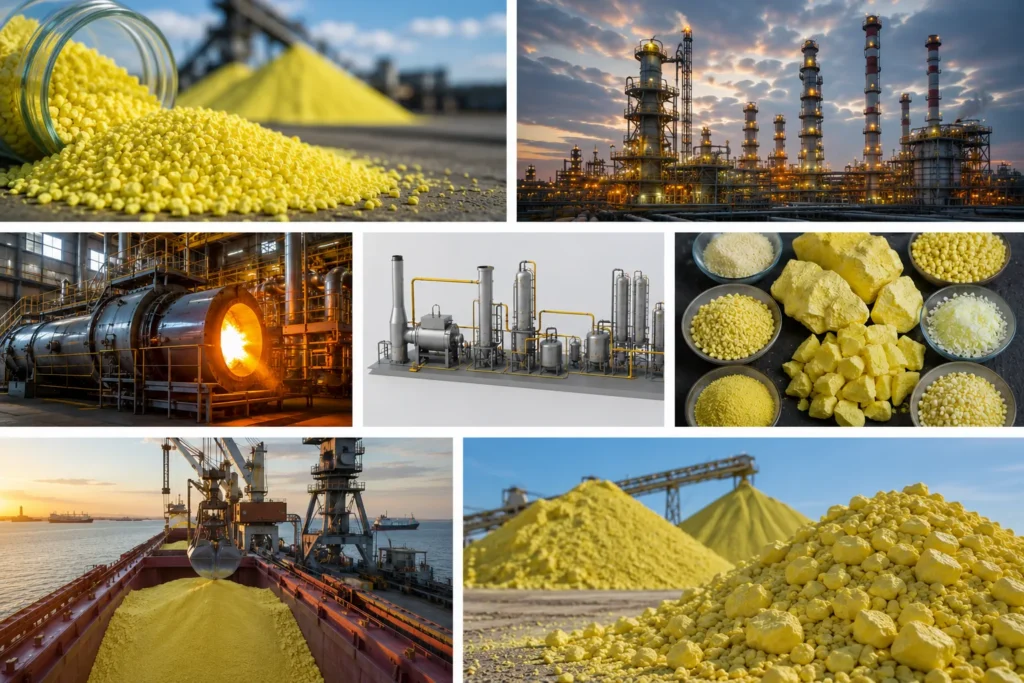
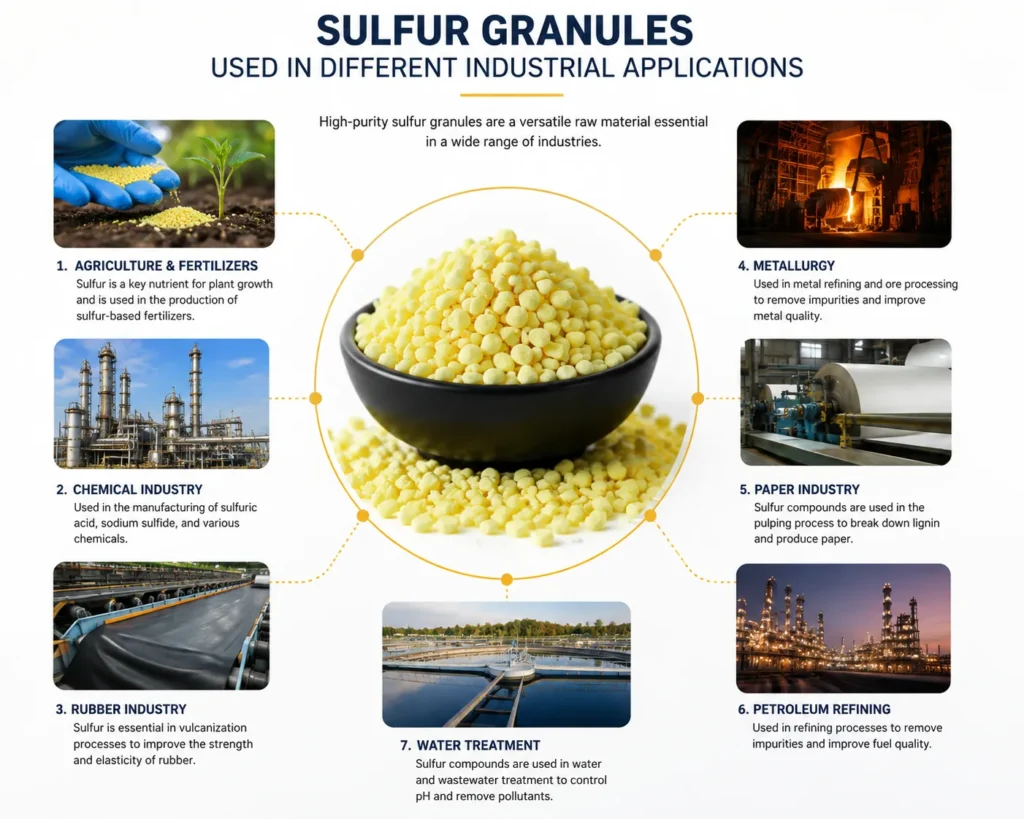
Sulfur is one of the most important industrial raw materials used across a wide range of industries. From fertilizer manufacturing and agriculture to chemical production, oil and gas, rubber, mining, and industrial processing, sulfur plays an essential role in many modern production processes.
The versatility of sulfur makes it an important commodity for manufacturers and industrial buyers. It can be used directly in some applications or converted into sulfur-based compounds, particularly sulfuric acid, which is a key raw material for numerous industrial processes.
In this guide, we explore the most important sulfur uses in different industries, explain how sulfur is used in each sector, and discuss what industrial buyers should consider when sourcing sulfur for commercial applications.
What Is Sulfur Used For?
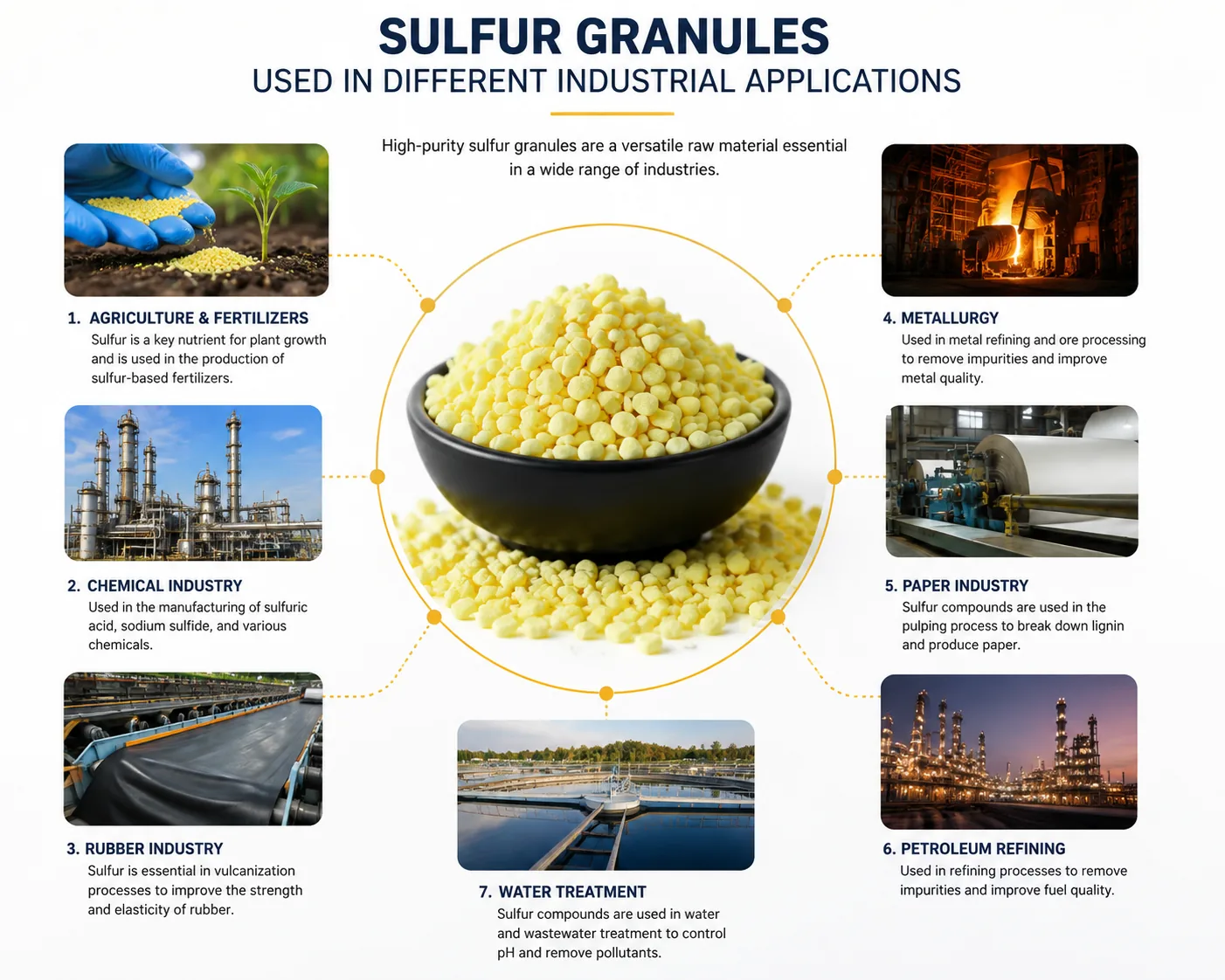
Sulfur is used as both a direct industrial material and a raw material for producing other chemicals. One of its most important applications is the production of sulfuric acid, which is widely used in fertilizer manufacturing, chemical processing, mining, petroleum refining, and other industries.
Other important sulfur uses include agriculture, rubber vulcanization, chemical manufacturing, petroleum and petrochemical processing, and mineral processing.
The main industries that use sulfur include:
- Agriculture
- Fertilizer manufacturing
- Chemical manufacturing
- Oil and gas
- Petroleum and petrochemical processing
- Rubber and tire manufacturing
- Mining and metal processing
- Manufacturing and industrial processing
Understanding these applications is important for companies looking to purchase sulfur for industrial or commercial use.
Sulfur Uses in the Agriculture Industry
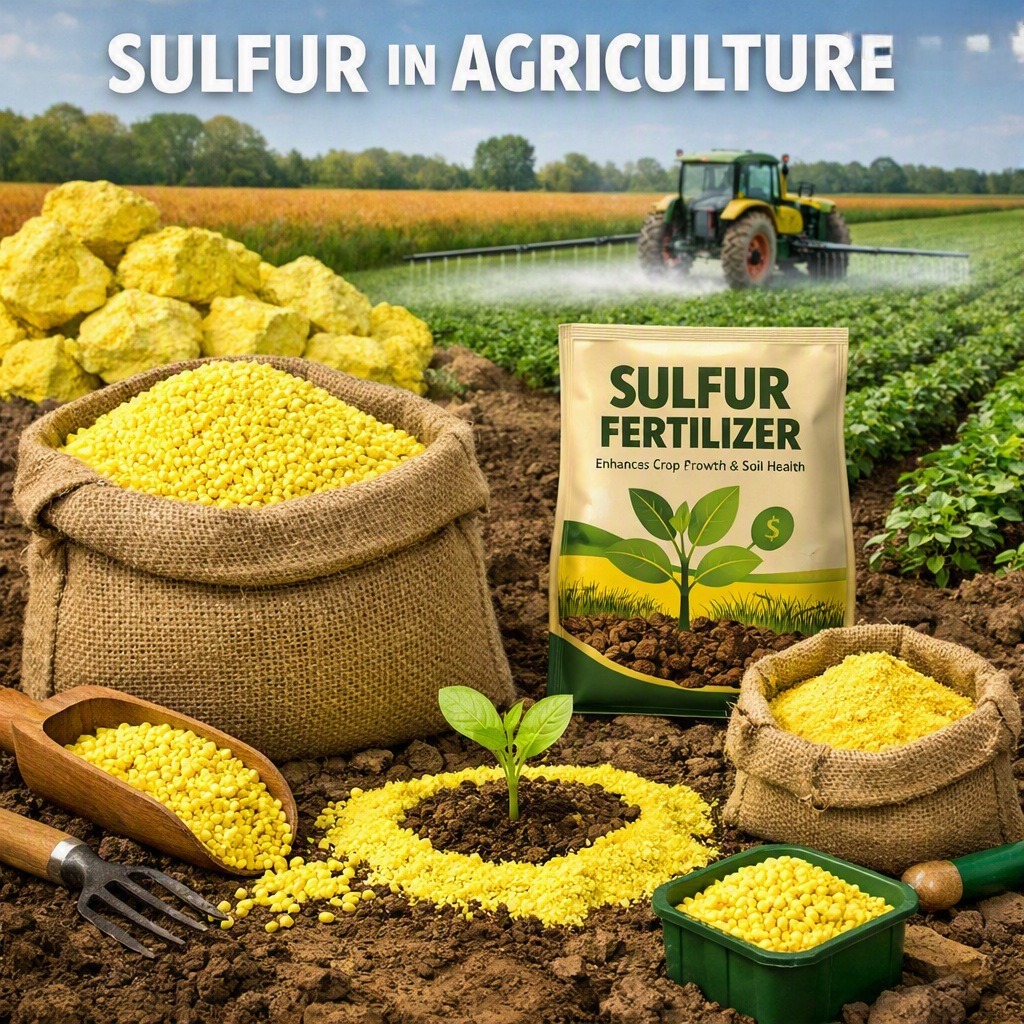
Agriculture is one of the important sectors where sulfur is used. Sulfur can serve as a source of sulfur nutrition for plants and can also be used in agricultural products designed for specific soil and crop requirements.
Sulfur is an essential plant nutrient and contributes to the formation of important biological compounds, including amino acids and proteins. Depending on the agricultural application, sulfur may be supplied as elemental sulfur or incorporated into sulfur-containing fertilizers and agricultural formulations.
How Is Sulfur Used in Agriculture?
Common agricultural applications of sulfur include:
- Providing sulfur as a plant nutrient
- Producing sulfur-containing fertilizers
- Supporting soil management programs
- Formulating agricultural products
- Supporting crop nutrition
The appropriate sulfur product depends on factors such as soil conditions, crop requirements, particle size, purity, physical form, and application method.
Sulfur Uses in Fertilizer Manufacturing
One of the largest and most important industrial applications of sulfur is related to fertilizer production.
Elemental sulfur can be converted into sulfuric acid, an essential industrial chemical used in the production of phosphate fertilizers and other agricultural products. This makes sulfur an important raw material in the fertilizer supply chain.
The general industrial pathway can be summarized as:
Elemental Sulfur → Sulfur Dioxide → Sulfur Trioxide → Sulfuric Acid
Sulfuric acid produced from sulfur is then used in various fertilizer manufacturing processes.
Why Is Sulfur Important for Fertilizer Producers?
For fertilizer manufacturers, a reliable sulfur supply can be important for maintaining stable production. Product consistency, purity, physical form, logistics, and supply reliability can all influence the suitability of sulfur for a particular production process.
Companies purchasing sulfur for fertilizer production should therefore evaluate the complete product specification rather than focusing only on price.
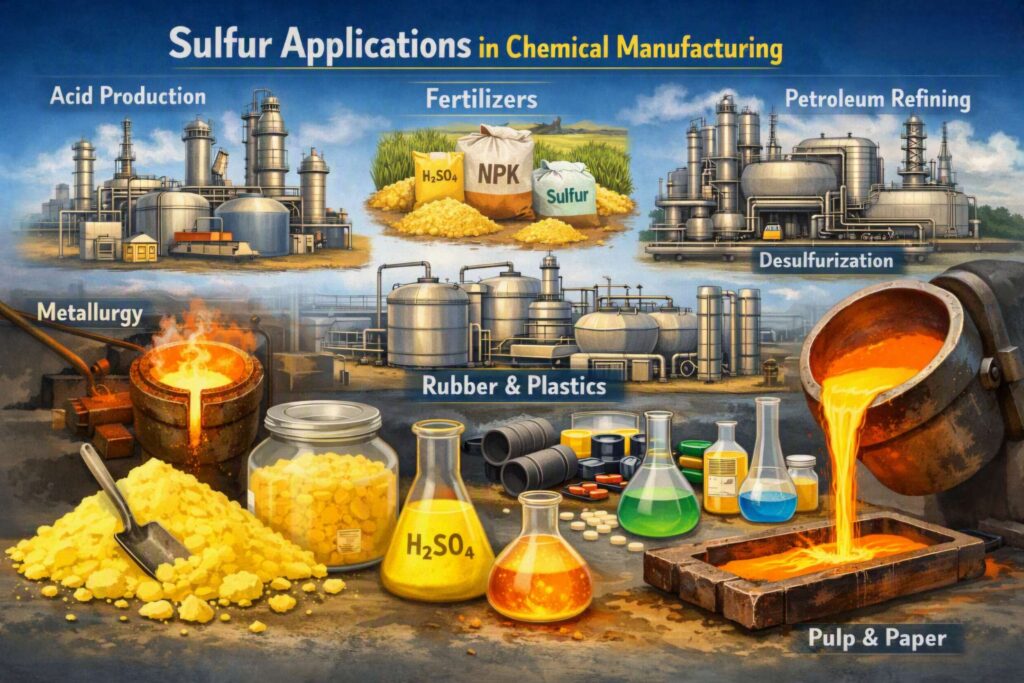
Sulfur Uses in the Chemical Industry
The chemical industry is another major user of sulfur. Elemental sulfur can be used as a raw material for producing sulfur-containing chemicals, intermediates, and industrial compounds.
One of the most important chemical products derived from sulfur is sulfuric acid. Sulfuric acid is used in a wide range of chemical processes and is considered one of the world’s most important industrial chemicals.
Depending on the production process, sulfur can contribute to the manufacturing of:
- Sulfuric acid
- Sulfur-containing chemicals
- Chemical intermediates
- Industrial processing chemicals
- Specialty chemical products
The chemical versatility of sulfur makes it valuable to manufacturers that require a dependable industrial raw material for downstream production.
Sulfur Uses in the Oil and Gas Industry
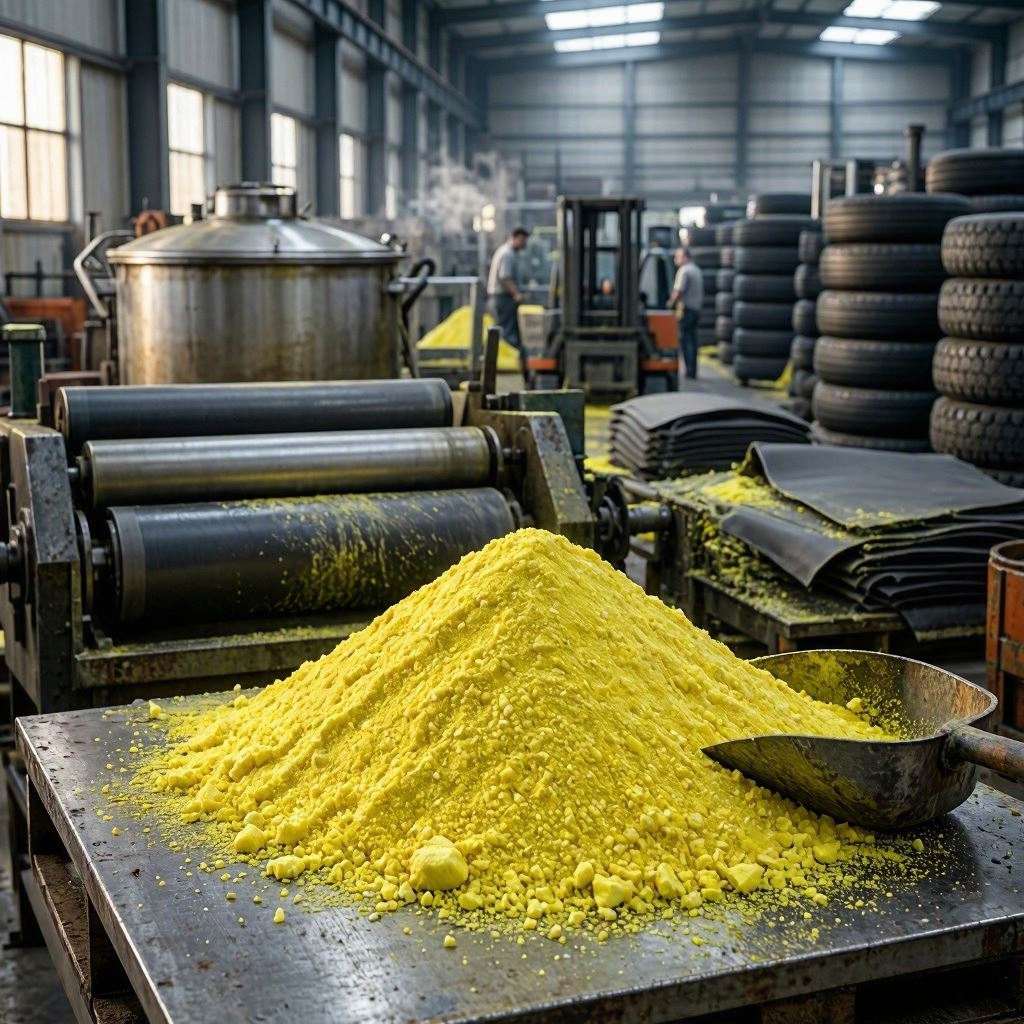
The oil and gas industry has a unique relationship with sulfur because petroleum refining and natural gas processing are major sources of commercially recovered elemental sulfur.
Crude oil and natural gas can contain sulfur compounds. During processing, these compounds may be removed to meet fuel quality and environmental requirements. The recovered sulfur can then be processed and supplied as an industrial raw material.
Why Is Sulfur Important in Oil and Gas?
Sulfur recovery allows the petroleum and natural gas industries to manage sulfur-containing compounds while creating a commercially useful material that can be supplied to other industries.
As a result, sulfur is closely connected to the global oil, gas, refining, and chemical supply chains.
Industrial sulfur recovered from petroleum refining and natural gas processing can subsequently be used for fertilizer manufacturing, chemical production, agriculture, rubber processing, and other applications.

Sulfur Uses in Rubber and Tire Manufacturing
Another important application of sulfur is rubber vulcanization.
During vulcanization, sulfur helps create cross-links between rubber polymer chains. This changes the physical properties of rubber and can improve characteristics such as strength, elasticity, durability, and resistance to deformation.
Sulfur-based vulcanization is widely associated with the production of tires and many other rubber products.
Why Do Rubber Manufacturers Use Sulfur?
Sulfur plays an important role in controlling the properties of vulcanized rubber. The sulfur specification and processing conditions can therefore be important considerations for rubber manufacturers.
Depending on the manufacturing process, buyers may need to consider sulfur purity, physical form, particle size, and other technical specifications.
Sulfur Uses in Mining and Metal Processing
Sulfur also has an important role in mining and metal processing, particularly through sulfuric acid production.
Sulfuric acid produced from elemental sulfur is used in various mineral processing and hydrometallurgical operations. In some processes, acidic solutions are used to extract or process metals from mineral resources.
This creates a connection between the sulfur supply chain and the mining industry. Industrial sulfur can therefore support downstream production of sulfuric acid used in mineral processing.
Sulfur Uses in Petroleum and Petrochemical Industries
In addition to being a major source of elemental sulfur, the petroleum industry also uses sulfur-derived chemicals in various industrial processes.
During petroleum refining, sulfur-containing compounds are removed from hydrocarbon streams. The recovered sulfur can subsequently enter the commercial sulfur market.
This makes petroleum refining an important part of the global sulfur supply chain.
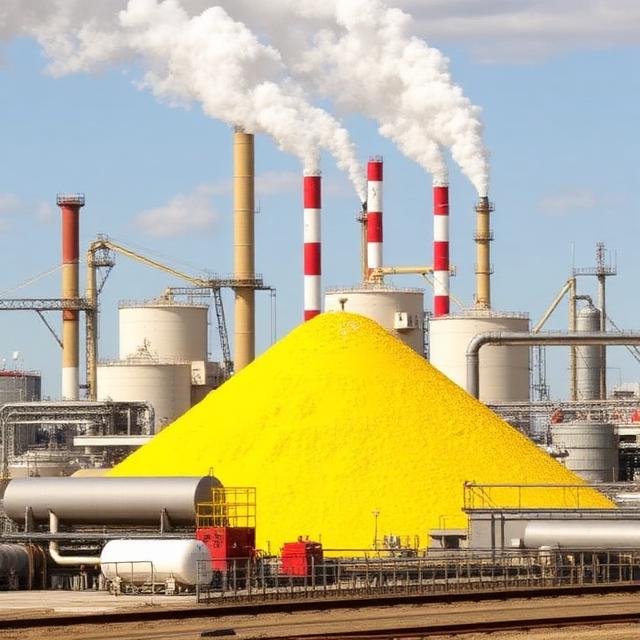
Other Industrial Uses of Sulfur
Beyond the major industries discussed above, sulfur and sulfur-derived chemicals are used in a variety of specialized applications.
Depending on the process and product specification, sulfur may be relevant to:
- Industrial chemical processing
- Selected pulp and paper processes
- Agricultural chemical production
- Specialty chemical manufacturing
- Industrial material production
- Various sulfur-based chemical processes
The exact application determines the required sulfur specification, including purity, physical form, particle size, moisture content, and packaging requirements.
Different Forms of Industrial Sulfur
Industrial sulfur can be supplied in different physical forms depending on the production process and end-use requirements.
Sulfur Granules
Granular sulfur is commonly selected for applications where convenient handling, transportation, storage, and controlled feeding are important.
Sulfur Prills
Sulfur prills are small solid particles produced through controlled industrial processes. Their physical characteristics can make them suitable for applications where consistent particle size and handling properties are required.
Sulfur Powder
Powdered sulfur has a smaller particle size and may be suitable for applications where dispersion or mixing characteristics are important.
Sulfur Flakes
Sulfur flakes are another commercial form that may be used in agricultural, chemical, and industrial applications depending on the required specifications.
The right physical form depends on the buyer’s production system, application, storage facilities, transportation requirements, and technical specifications.
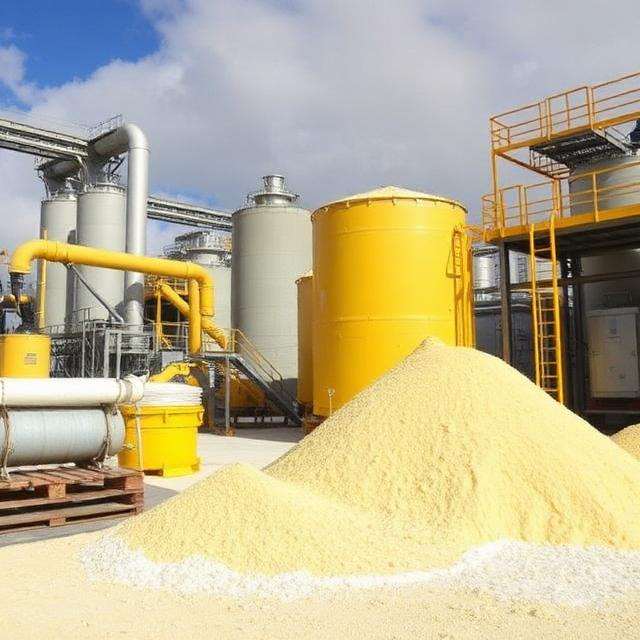
What to Consider When Buying Sulfur for Industrial Use
Choosing the right sulfur product is an important part of industrial procurement. Different industries may require different product specifications, and the cheapest product is not necessarily the most suitable option for a particular process.
Sulfur Purity
Purity is one of the most important specifications when purchasing industrial sulfur. Depending on the application, manufacturers may require sulfur with controlled impurity levels.
Physical Form
The physical form of sulfur can influence handling, transportation, storage, feeding, and processing. Buyers should select a form compatible with their production equipment and application.
Particle Size
Particle size can affect dispersion, mixing, handling, and application performance. The appropriate particle size depends on the intended use.
Moisture Content
Moisture can affect storage, transportation, handling, and processing. Industrial buyers should review moisture specifications when evaluating sulfur products.
Packaging
Packaging requirements depend on the order quantity, destination, storage facilities, transportation method, and customer requirements.
Documentation
For international industrial purchases, buyers may need product and shipping documentation such as a Certificate of Analysis (COA), Safety Data Sheet (SDS), Technical Data Sheet (TDS), Certificate of Origin, commercial invoice, and packing list.
How to Choose a Reliable Sulfur Supplier
Finding a reliable sulfur supplier is important for companies purchasing sulfur for manufacturing, agriculture, chemical processing, or other industrial applications.
Before placing an order, industrial buyers should consider:
- Available sulfur specifications
- Product purity
- Physical form
- Particle size
- Packaging options
- Available quantities
- Destination and logistics
- Product documentation
- Supply reliability
- Technical support
A supplier that understands the buyer’s application can help identify the most suitable product requirements and streamline the purchasing process.
Why Buy Sulfur from SmartPath?
SmartPath supplies sulfur for industrial and agricultural applications. According to the company’s sulfur product information, the product is intended for applications including chemical fertilizers, chemical processes, agriculture, and oil and gas.
For companies looking to source sulfur, SmartPath can discuss product requirements based on the intended application, quantity, destination, and other purchasing considerations.
Whether you are sourcing sulfur for fertilizer manufacturing, chemical production, agriculture, oil and gas applications, rubber processing, or another industrial process, contacting the supplier directly allows you to confirm the specifications and supply options available for your requirements.
Request a Sulfur Quotation
If your company is looking to buy sulfur for industrial or agricultural use, SmartPath can help you discuss your sulfur requirements.
Before requesting a quotation, it is useful to provide information such as the intended application, required quantity, destination, preferred physical form, packaging requirements, and any technical specifications.
Contact SmartPath for Sulfur Supply
For more information about sulfur properties and general applications, read our detailed guide:
What Is Sulfur? Properties, Uses, and Industrial Applications
Frequently Asked Questions About Sulfur Uses
What is sulfur mainly used for?
Sulfur is mainly used to produce sulfuric acid, which is an important raw material for fertilizer manufacturing and many other industrial processes. Sulfur is also used in agriculture, rubber vulcanization, chemical manufacturing, petroleum processing, and mining.
What industries use sulfur?
Major sulfur-consuming industries include fertilizer manufacturing, agriculture, chemical manufacturing, oil and gas, petroleum and petrochemicals, rubber and tire manufacturing, and mining and metal processing.
Why is sulfur important in fertilizer production?
Sulfur is important because it is used to produce sulfuric acid, which is an essential material in several fertilizer manufacturing processes. Sulfur can also be used directly as a nutrient source in agriculture.
How is sulfur used in the rubber industry?
Sulfur is primarily used as a vulcanizing agent. It helps create cross-links between rubber polymers, improving properties such as strength, elasticity, durability, and resistance to deformation.
How is sulfur used in the oil and gas industry?
Sulfur-containing compounds are removed during petroleum refining and natural gas processing. The recovered sulfur can then be processed and supplied as an industrial raw material for other industries.
What factors should I consider when buying sulfur?
Important factors include sulfur purity, physical form, particle size, moisture content, packaging, documentation, quantity, destination, logistics, and the specific requirements of the intended application.
Where can I buy industrial sulfur?
Industrial buyers can contact sulfur suppliers directly to confirm available specifications, quantities, packaging, documentation, and delivery options. SmartPath supplies sulfur for industrial and agricultural applications and can be contacted to discuss sulfur sourcing requirements.
Contact SmartPath to Discuss Your Sulfur Requirements
Conclusion
Sulfur is a versatile industrial raw material with applications across some of the world’s most important industries. Its role in sulfuric acid production makes it particularly important for fertilizer manufacturing, chemical processing, mining, and other industrial sectors.
At the same time, elemental sulfur is used directly in agriculture, rubber vulcanization, and other specialized applications. The right sulfur product depends on the specific requirements of each industry and production process.
For industrial buyers, selecting sulfur should involve more than comparing prices. Purity, physical form, particle size, moisture, packaging, documentation, logistics, and supply reliability should all be considered before placing an order.
If you are looking to buy sulfur for agriculture, fertilizer production, chemical manufacturing, oil and gas, rubber, or another industrial application, contact SmartPath to discuss your requirements and available sulfur supply options.